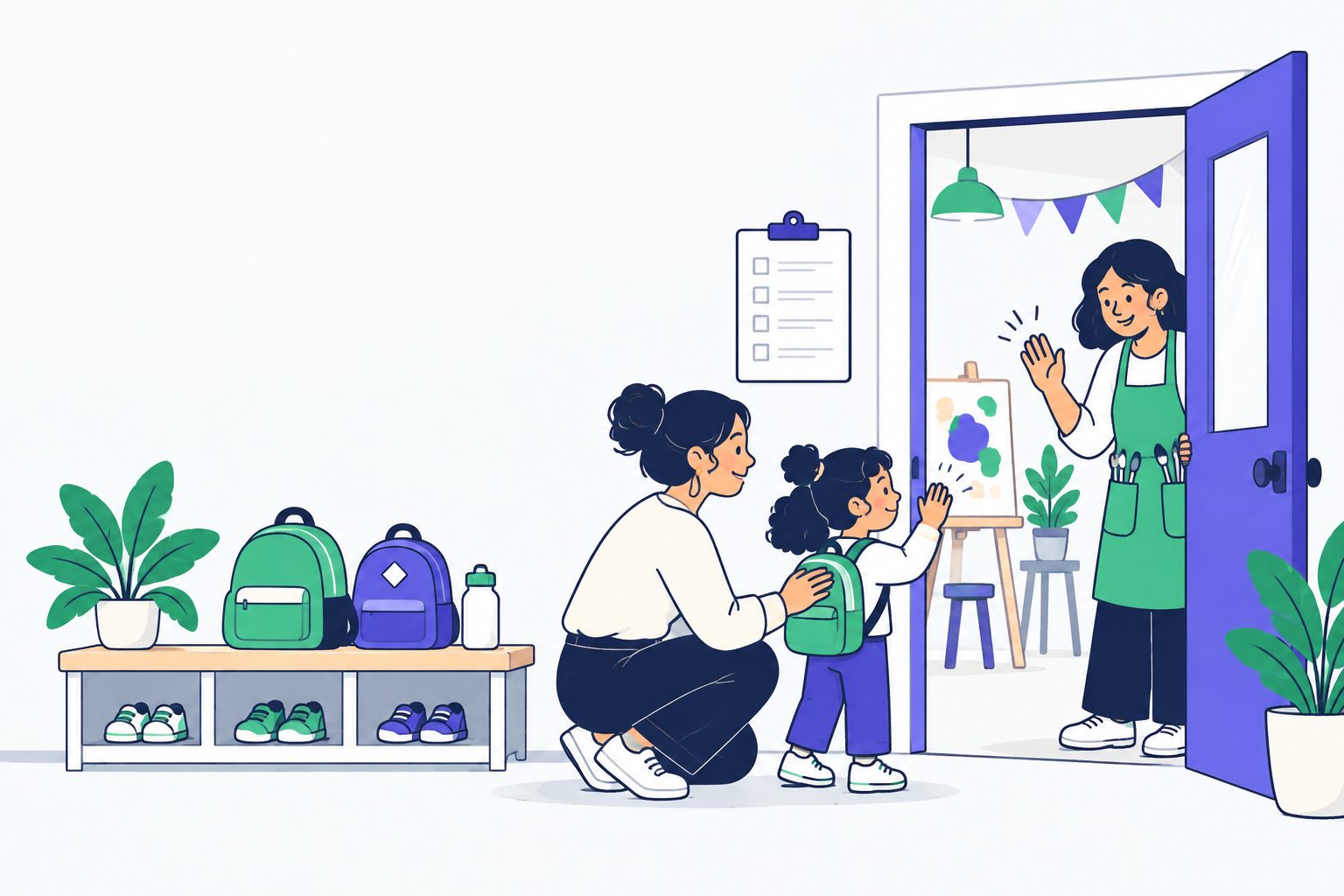
You pull up outside the studio with six minutes to spare, one kid in the backseat still fighting a jacket, and no idea whether you're allowed to leave. The website called it a "drop-off class." Nowhere on the page did it say whether that's true for a four-year-old, whether someone needs to sign a waiver on the spot, or whether "drop-off" actually means stay in the lobby, we'll call you. So you idle in the parking lot with the engine running, weighing whether to walk in and find out or just turn around.
I've been on both sides of this. As a parent, I've shown up to something billed as drop-off and been quietly handed a clipboard and told I couldn't leave — not because anyone was hiding anything, just because the detail that mattered to me lived on a different page than the one I'd read.
1. Where do care details actually live?
Almost never on the page a parent is looking at when they decide to sign up. They tend to sit on a "Policies," "FAQ," or "Camp Rules" page one or two clicks removed from the class or event listing itself — written once, for a different purpose, by someone thinking about liability and staffing rather than a parent standing in a parking lot at 9:54 on a Saturday.
That's not a small gap. The listing is where the decision gets made. The policy page is where the actual answer lives. A parent comparing three Saturday morning options isn't going to open six tabs to find out which one lets them run an errand and which one needs them in the building the whole time.
2. What actually needs to be on the class or event page?
Four things, plainly stated, not implied by the class name:
Little Explorers (drop-off, ages 3-6)
Little Explorers (ages 3-6) · Drop-off: yes, sign in at the front desk · Caregivers of ages 3-4 must remain on-site · Bring a labeled water bottle and closed-toe shoes
Whether a caregiver can leave, or must stay. Any age cutoff for that rule, since "drop-off" often means one thing for a seven-year-old and another for a three-year-old at the same studio. What to bring, if anything specific is expected. And where to check in, so the first sixty seconds in the building aren't spent hunting for a sign-in sheet.
None of this replaces a full policies page — insurance and liability language belongs there. It just means the handful of facts that change a parent's morning shouldn't require reading a different document to find.
3. Why does the studio benefit from saying this upfront?
Because the alternative isn't a parent who reads the fine print. It's a parent who guesses, gets it wrong, and either has an awkward moment at the door or quietly picks a different class next season because this one felt confusing. A studio that states the care details plainly isn't giving anything away — every parent asks these questions anyway, either by email, by phone, or by standing at the front desk figuring it out in real time. Answering them on the page just moves that same conversation earlier, where it costs you nothing.
Why this matters if you run something local
A class or camp lives or dies on whether parents trust it enough to book again. Supervision details are exactly the kind of thing that erodes that trust when they're a surprise and builds it when they're not. Stating them plainly isn't extra work on top of running the class — it's the same information you already give at the door, written down once instead of explained fresh to every family that asks.
The five-minute fix
- State whether the class or event is drop-off, stay-with-caregiver, or a mix, directly on its own page.
- Note any age cutoff where the rule changes.
- List what to bring, if anything is expected beyond showing up.
- Say where and how to check in.
- Keep the full policy page too, but don't make it the only place these four facts live.
How Tailend helps
When we bring in a class or camp listing, we look for these care details on the page itself, not just the policy page behind it, so a parent comparing options can see at a glance whether a class is really drop-off for their child's age.
We're starting in Philadelphia and working outward.