Notes on local data that people can trust
Practical guides for building with local data, habits that help local organizers get found, and what it takes to keep listings accurate.
Transitioning off gpt-4o-mini: our benchmark results
GPT-6 Luna, gpt-5-nano, Gemini 3.1 Flash-Lite, DeepSeek and Gemma compared on recall, precision, latency and cost for structured extraction.
More from the blog
-

Why your assistant keeps missing the small local places
Assistants and agents lean on what is easy to read, so small local businesses with their facts trapped in flyers and posts go unrecommended.
-

Keep recommendations fresh as the date approaches
A how-to for agent and app builders: save a listing's id instead of a copy, watch the change feed for the events you have recommended, re-check the one you are about to send a family to, and say "as of" when you report it.
-

Spend your agent's reasoning on the family, not on event pages
A how-to for agent builders: instead of paying a high-reasoning model to parse every event page and then wondering if it read it right, ask for typed fields, trim the payload, check the listing's own last-confirmed field, and save the reasoning for fitting the options to the family.
-

Give your family agent the local long tail in an afternoon
A how-to for wiring a family or personal AI agent to local events, classes, camps and places with two or three tools and a short set of ground rules, so it can recommend the small, current, nearby things instead of only the famous ones.
-

Why your assistant keeps suggesting the same five places
Assistants and big platforms keep surfacing the same well-known places because small local offerings are hard to read, so a parent (and the builder serving them) never hears about the class or market two blocks away; ranking by date, distance and age fit instead of fame changes the answer.
-

The week-of problem
An event confirmed last month is not safe to recommend today, because dates move, sessions fill, rain dates kick in and things get cancelled in the final days; freshness should be measured where the decision happens, close to the event, and a listing should say honestly when it was last confirmed.
-
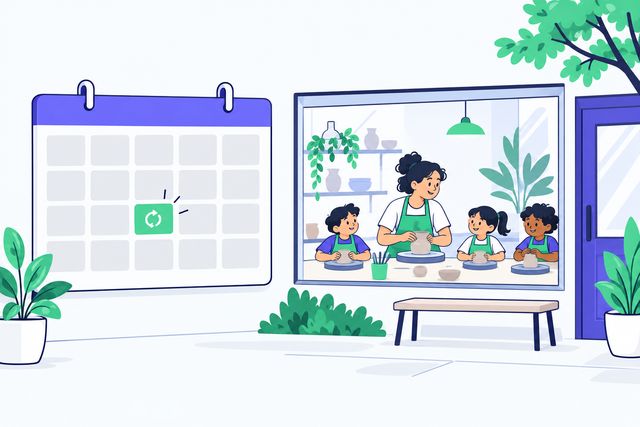
A weekly class should stay visible without taking over the calendar
Treating a recurring class as one listing shown by its next date keeps both regulars and new visitors oriented, instead of flooding the calendar or vanishing after the first week.
-

Families need to know what "drop-off" means
Supervision and care details (who can leave, who must stay, what to bring) often live on a policy page instead of the listing where a parent is deciding.
-
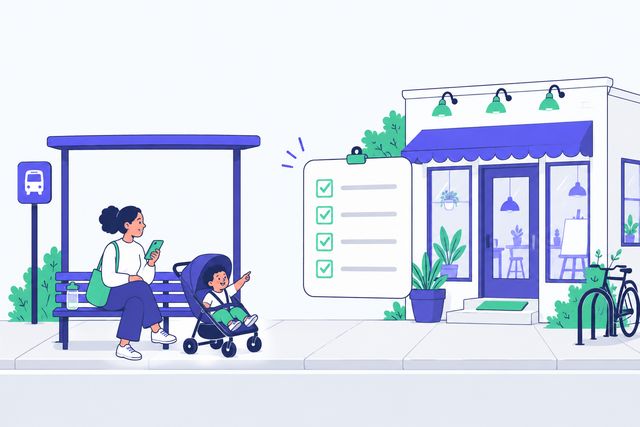
The details that make a listing usable
A clear summary, a real contact route, and practical visit information help someone decide and act before they move on to the next tab.
-

A missing page is not always a cancelled event
A broken link and a real cancellation look the same from the outside; we check which one it is before taking anything off a local calendar.
-

See what's happening in your neighborhood market this month
A how-to for a local business owner (with a developer friend or an AI assistant) to answer four practical questions about the neighborhood market with a handful of real API requests: what is on my slot, what similar classes cost, who else is here, and where the clashes are.
-
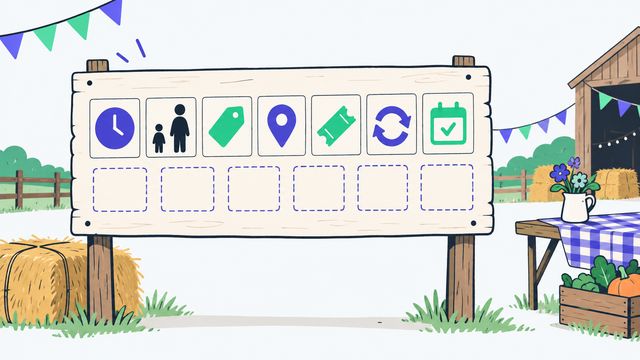
The seven facts almost every event listing leaves out
The specific facts listings routinely omit and why each one costs trust and recommendations.
-

A place is more than a pin on a map
Hours and admission details for a place are scarce, changeable facts. They deserve real evidence rather than an optimistic default, even when that means saying we don't know yet.
-

An address can be almost right and still be wrong
A location match that's close but not exact can send a parent, a customer, or a delivery route to the wrong door; careful matching is worth the extra step.
-

A date is a promise, not a guess
An invented or unclear event date can send a family out for nothing and quietly multiply into duplicate rows on a builder's calendar; a date should be published only when something actually says it, not assumed.
-

Posting only on social is quietly hiding you
Social posts reach followers but give search and AI agents nothing stable to find; keep posting and give every event a plain page.
-

Small businesses can't see their own market
Local operators need a shared, trustworthy picture of nearby activity to make small decisions well.
-

A wrong merge costs more than a missed duplicate
Local data should treat uncertain identity as a question for review, not an excuse to combine different listings.
-

Freshness is the product
"Confirmed recently, close to the event" is a better freshness signal for local data than "checked on a routine schedule."
-
Why your events don't show up
A few practical publishing habits make local events easier for people and local tools to find.
-

Your local market is public, but you can't read it
Everything an owner needs to understand the local market (what else is on, what it costs, who is new) is already public, but it sits on flyers, calendar widgets, booking portals and social posts that no one can read side by side.
-

What running a local family guide taught us about local data
Tailend grew out of TinyJawns, a family guide in Philadelphia; four problems kept coming back (messy sources, the cost of knowing a page was read correctly, things changing as the date approaches, and the long tail getting lost), and Tailend is built around each of them.
More posts are on the way.